Designing systems that revolves around the user experience requires understanding the psychology of the brain and behaviour. Lecture 4 is about the theory behind instructional and interactive design.
Instructional design is the design in instructions, creating a systematic sequence and strategies to meet the desired learning outcome. The design system is used in a daily basis and is significant in guiding users to adapt with new technology and knowledge. Instructional designs must be clear in interpretation and be sensitive to cultural differences of the users.
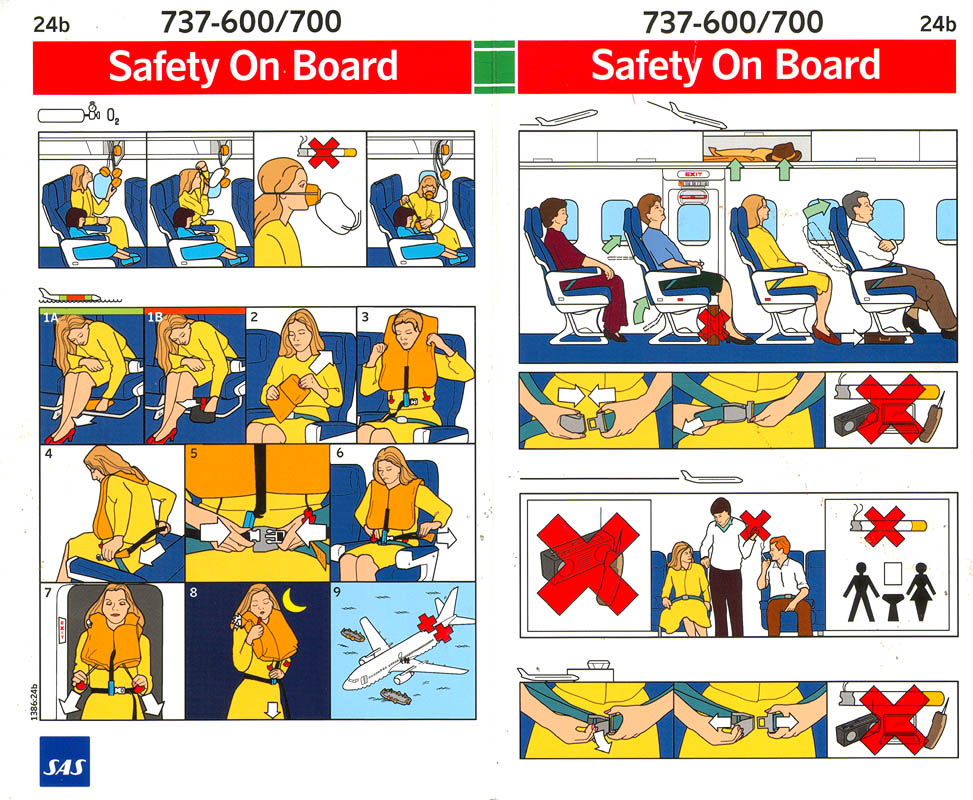
[graphic illustrational instructions] (n.d.). Retrieved from
https://travel.stackexchange.com/questions/90850/in-flight-safety-instructions-for-deaf-passengers
Creating a successful instructional design requires understanding the way human process information. The design revolves around the cognitive load theory, a study of how humans observe, memorise and interpret to deliver the desired outcome. Prioritising the structural use of elements in the design layout affects how we manipulate information in our short term memory. Proximity is a common and effective method in linking elements together to evoke the desired interpretation of information.
Interactive media design also uses the cognitive load theory to understand how user would interpret knowledge and interact with the product. For screen based media there are four types of interaction:
- Instruction: guiding instructions to users through buttons
- Conversation: allowing users to input information into the system for the program to respond
- Manipulation: allowing users to manipulate structure and elements to achieve goals within the program
- Exploration: allow users to navigate through the program through trial and error
Final Thoughts
Lecture 4 was insightful in learning the psychology behind the human brain to make a successful design in instructions and interactive media.
 Journey through Interactive Design